

Short answer: HVAC marketing that works starts local: a complete Google Business Profile, steady reviews and a fast website with a page for each service and area. Add Google Ads and Local Services Ads for peak-season demand, maintenance plans and past-customer email for recurring revenue, and above all answer every call. Measure everything by cost per booked job.
HVAC marketing has a few things most industries don’t: demand that spikes with the weather, emergency calls that go to whoever answers first, and customers who will let you into their home only if they trust you. The companies that grow aren’t always the ones spending the most. They are the ones that are easy to find, easy to trust and fast to respond.
Here are 15 HVAC marketing strategies, grouped into getting found, generating demand and converting the calls you already get.
Getting found
1. Make your Google Business Profile complete
When a furnace fails, homeowners search “HVAC repair near me” and call from the map. Your Google Business Profile is the most important listing you have:
- The most specific primary category (“HVAC contractor”), plus relevant secondary ones.
- Every service listed, with your full service area.
- Accurate hours, including emergency availability.
- Real photos of your team, vans and work, added regularly.
It also feeds AI. In BrightLocal’s study of local AI searches, Google Business Profile was the single largest source of citations. Our Google Business Profile checklist covers every field.
2. Build a steady flow of reviews
Reviews decide which company in the map pack gets the call. Ask every customer, every time, with a direct link, soon after the job. Respond to every review. Google’s policy doesn’t allow asking only happy customers or offering anything in return, so build a simple habit, not a gimmick.
3. Have a website that sells on a phone
Most HVAC searches happen on a phone, often in a hurry. Your site needs:
- A tap-to-call phone number in the header.
- A clear headline about the customer’s problem: no heat, no AC, high bills.
- A page for each service: AC repair, furnace installation, heat pumps, maintenance, indoor air quality.
- Reviews, licenses, financing and guarantees visible early.
- Fast load times, with no content hidden behind JavaScript.
Here is the difference it makes, using a redesign concept we built for a Des Moines-area HVAC company (business details hidden):
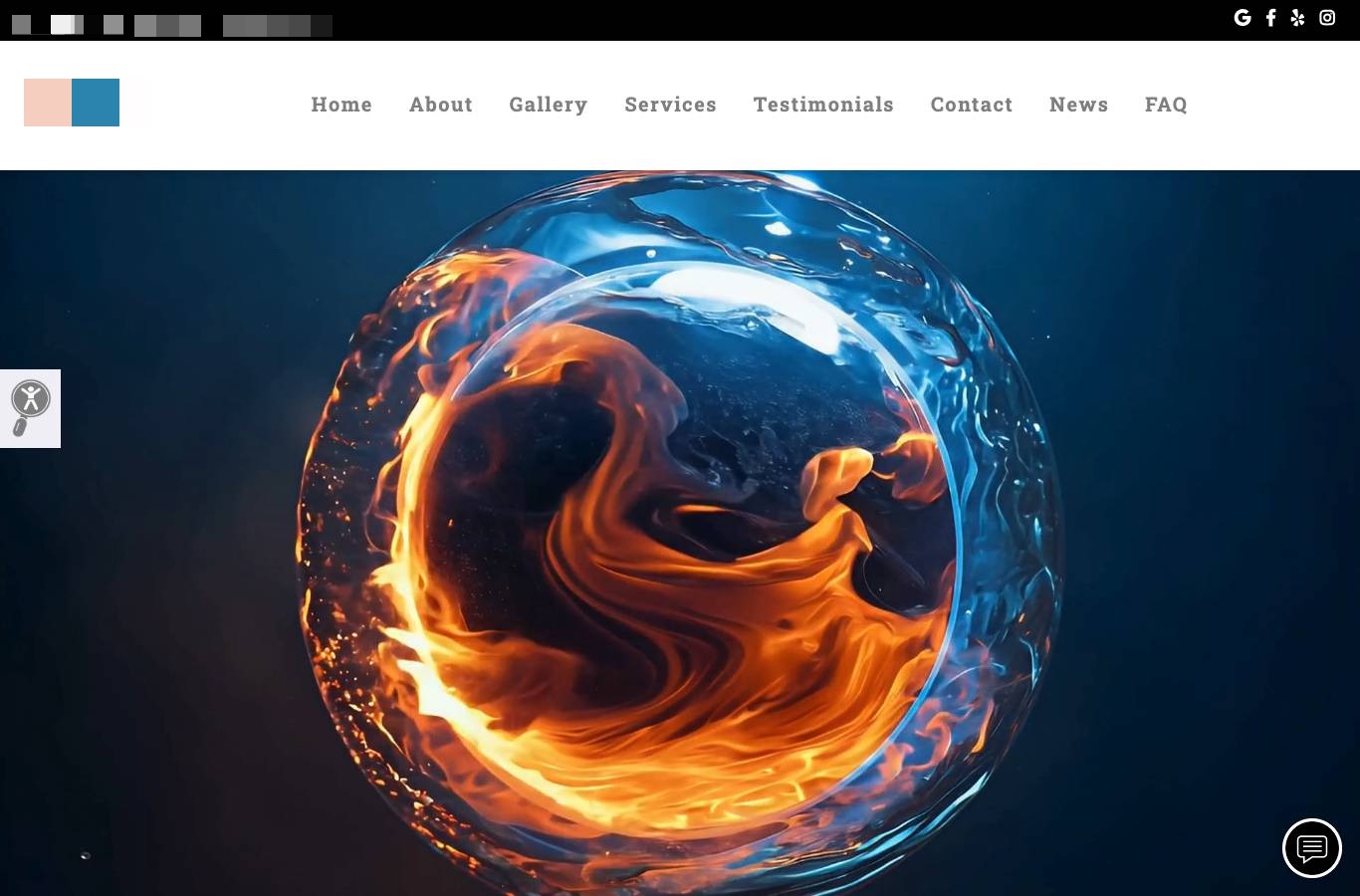
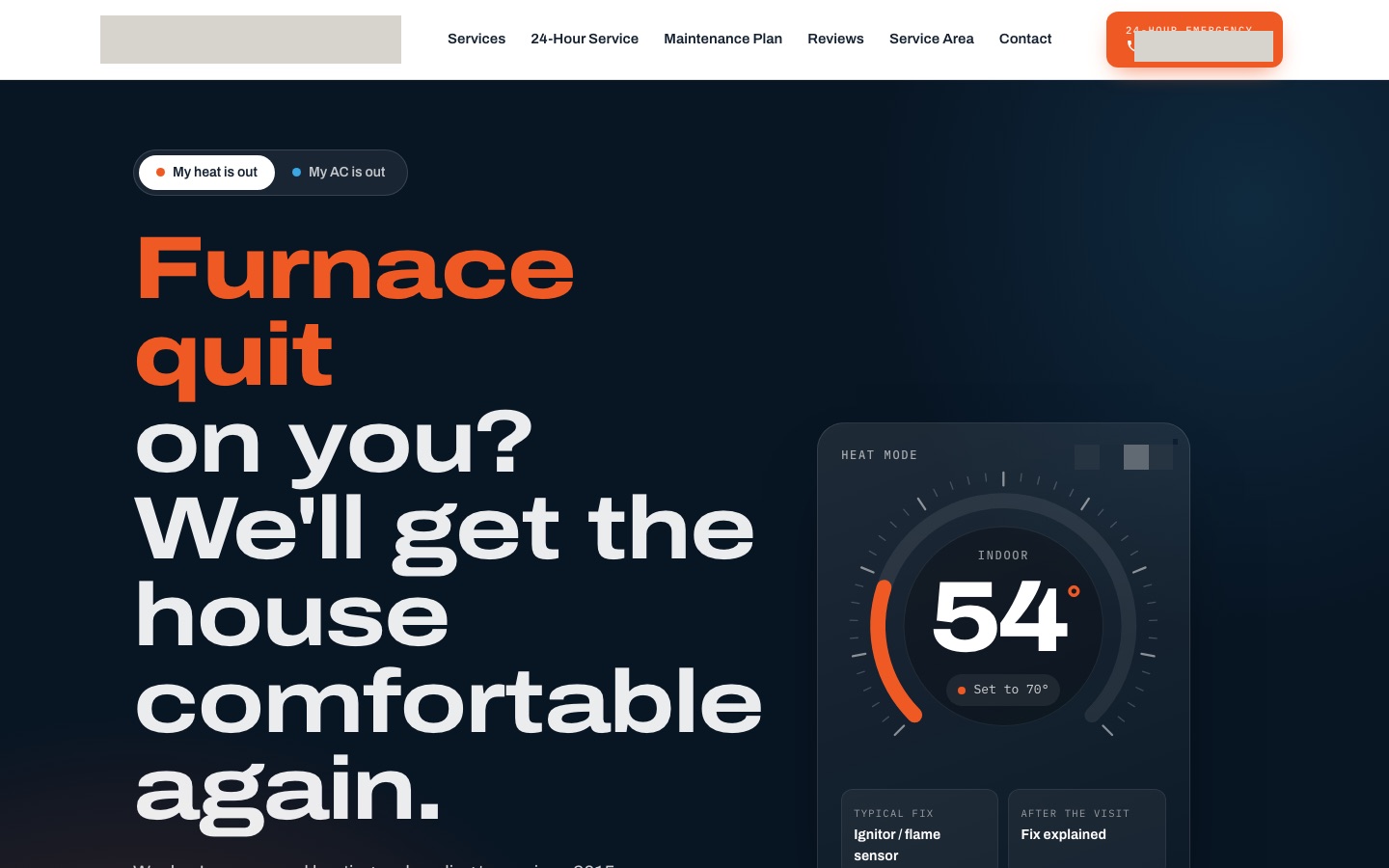
If your site looks like the first one, a $500 website redesign is often the fastest marketing win you can buy.
4. Rank in every city you serve
HVAC SEO is mostly local SEO. Create service pages and location pages for the towns you actually serve, with real local detail: neighborhoods, typical homes, local permits and climate. Keep your name, address and phone number identical everywhere, from your site to Yelp, Bing Places, Angi and the BBB.
5. Show up in AI recommendations
Homeowners are starting to ask ChatGPT and Google’s AI Mode “who’s the best HVAC company in [city]?”. The answers draw on your Google profile, reviews, website and listings. We explain how this works in how local businesses get recommended by ChatGPT, and our Local GEO service tracks it city by city.
Generating demand
6. Run Google Ads for high-intent searches
Search ads put you at the top for “AC repair near me” and “furnace replacement [city]” today. Organize campaigns by service and season, use call extensions, add negative keywords (for example jobs, DIY and parts), and track calls through to booked jobs. In WordStream’s 2026 benchmarks, the median cost per click for home and home improvement was $8.33, so wasted clicks add up fast. Our guide to PPC management costs explains how to budget.
7. Test Google Local Services Ads
Local Services Ads appear above regular ads for many home-service searches, show your reviews, and charge per lead rather than per click. Google verifies businesses before they can run them. They are worth testing alongside search ads, with every lead tracked to a booked job.
8. Plan around the seasons
HVAC demand is seasonal, so your marketing should be too:
| Season | Focus |
|---|---|
| Spring | AC tune-ups, maintenance plan sign-ups, early-bird replacement offers |
| Summer | AC repair and replacement ads, fast response, review requests |
| Fall | Furnace tune-ups, heat pump and furnace replacement, maintenance renewals |
| Winter | No-heat emergency ads, 24/7 availability, indoor air quality |
Shift ad budget toward each peak, and use the shoulder seasons to sell maintenance.
9. Sell maintenance plans
Maintenance plans smooth out seasonality, create recurring revenue, keep you first in line when equipment fails, and turn tune-ups into replacement opportunities. Promote them on your site, at every service call and in every follow-up email.
10. Market to past customers
Past customers are your cheapest source of new jobs. Send seasonal tune-up reminders, replacement offers for aging systems, and a simple newsletter by email or text. Many HVAC companies have hundreds or thousands of past customers they never contact again.
11. Ask for referrals, and make it easy
Happy customers recommend contractors to neighbors and family. Ask at the end of a good job, leave a card or send a follow-up text with a referral link, and thank people who refer.
12. Post on social media with a purpose
You don’t need to go viral. Short videos of real installs, before-and-after photos, seasonal tips (“change your filter”), team introductions and customer stories build familiarity in your area. Boost the best posts to homeowners in your service area during peak season.
Converting the calls you already get
13. Answer every call, including after hours
This is where many HVAC companies lose the most money. A homeowner with no heat at 9 pm calls the next company if you don’t pick up. Options:
- AI-assisted call answering that answers 24/7, qualifies the job, checks the service area and books the appointment, handing complex calls to a person.
- Missed-call text-back, so every missed caller gets an immediate text and a way to book.
- A clear after-hours process for emergencies.
For HVAC businesses with $1M+ in revenue, our audits almost always find thousands of dollars a month in missed jobs and manual work that intake and process automation can recover. See our digital transformation services for what that looks like.
14. Follow up on every estimate
Replacement estimates are big decisions, and many customers get several quotes. A simple follow-up sequence (a thank-you text the same day, an email with financing options, a check-in a few days later) wins jobs that would otherwise go quiet.
15. Track cost per booked job
Know which channel produces booked jobs, not just leads. Use call tracking, ask every customer how they found you, and connect your marketing to your scheduling or CRM software. Then move budget to what works.
A simple HVAC marketing plan
If you are starting from scratch, do it in this order:
- This week: complete your Google Business Profile, ask your last 20 customers for reviews, and make sure every call gets answered or texted back.
- This month: fix your website’s mobile experience, add service and area pages, and set up call tracking.
- This quarter: launch Google Ads and test Local Services Ads before your next peak season, start a past-customer email, and promote maintenance plans.
- Ongoing: keep reviews flowing, post seasonally, publish helpful local content and track cost per booked job.
The bottom line
The best HVAC marketing isn’t complicated: be the most visible and best-reviewed company in your area, have a website that turns phone visitors into calls, answer every one of those calls, and measure what each channel actually books. Most companies have room to grow on all four.
If you want help, start with what costs least and pays fastest: a website redesign, local SEO, and intake that never misses a call.